Picaridin or DEET: What’s the Difference and Which Is Safer for Camping and Hiking?
When you’re planning a camping or hiking trip, one thing you definitely don’t want to forget is insect repellent. Whether you’re deep in the woods or just enjoying an evening by the lake, mosquitoes and ticks can quickly turn a great day into a miserable one. Two of the most common ingredients in store-bought repellents are picaridin or DEET. But what’s the difference between them? And which one is safer, especially if you’re traveling with pets?
Let’s break it down so you can make an informed choice for your next outdoor adventure.
What Is Picaridin?
Picaridin is a synthetic compound developed in the 1980s by Bayer and modeled after the natural compound piperine found in black pepper plants. It’s been widely used in Europe and Australia for decades and gained popularity in the U.S. as a DEET alternative.
Picaridin works by blocking a mosquito’s ability to sense its human target. It repels mosquitoes, ticks, flies, fleas, and chiggers. You’ll find it in 5%–20% formulations. Higher concentrations provide longer protection, up to 12 hours for mosquitoes and 8 hours for ticks.
What Is DEET?
DEET (short for N,N-Diethyl-meta-toluamide) has been on the market since the 1950s and is the most well-known insect repellent. It’s incredibly effective at repelling mosquitoes, ticks, biting flies, and other pests.
DEET doesn’t kill insects but interferes with their ability to detect body heat and carbon dioxide, making it harder for them to find you. It is available in concentrations ranging from 5% to 100%, but around 20%–30% is enough for most people, offering several hours of protection.
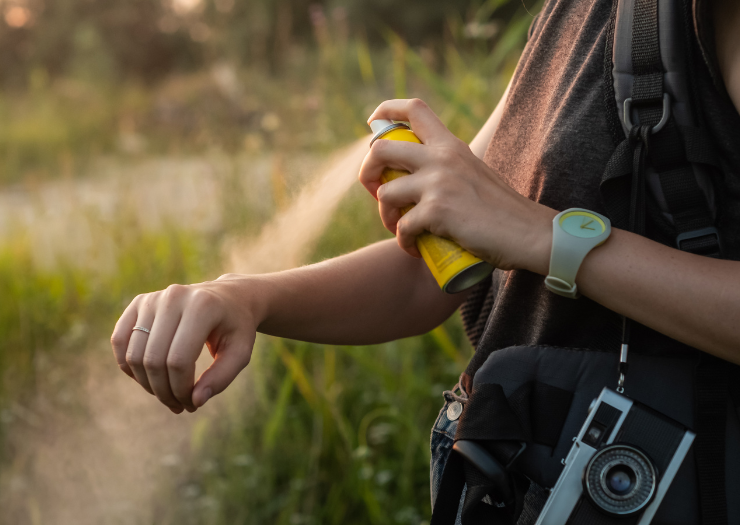
What’s Safer: DEET or Picaridin?
Both DEET and picaridin are considered safe when used as directed, but they each have pros and cons.
Picaridin pros:
- Odorless and non-greasy
- Less likely to irritate skin
- Doesn’t damage plastics or synthetic materials
- Lower toxicity to humans when compared to DEET
DEET pros:
- More research-backed due to its longer history
- Broad-spectrum protection
Concerns with DEET:
- Strong smell and oily feel
- Can irritate eyes or skin in higher concentrations
- Can damage plastic gear, sunglasses, and clothing
- Not recommended for daily use over long periods
For families with young children or those with sensitive skin, picaridin may be the better choice. However, DEET still holds the top spot for extreme environments with dense insect populations.
Are Picaridin or DEET Toxic for Dogs?
This is a must-know if you’re bringing your four-legged companion on the trail.
DEET is toxic to dogs. Even small amounts can cause vomiting, tremors, and seizures if ingested or absorbed through their skin. Never apply DEET products to your pet.
Picaridin is also not recommended for dogs. While it’s less toxic than DEET, ingestion or exposure can still lead to health issues.
Use pet-specific insect repellents or natural alternatives that are safe for animals. Always read labels carefully.

How Often Should You Reapply?
Picaridin:
- 10%: Every 4–6 hours
- 20%: Up to 12 hours of protection
DEET:
- 10%: About 2 hours
- 30%: Around 6 hours
- 100%: Up to 12 hours, though this high a concentration is rarely necessary
Sweating, swimming, or towel-drying can reduce the effectiveness of either product, so reapply as needed.
Looking for a Natural Option?
If you prefer to avoid synthetic repellents altogether, we’ve got you covered. Our go-to solution is this Homemade Mosquito Spray with Essential Oils. It’s simple to make, gentle on skin, and safe for families who want to stay bite-free the natural way.
Both DEET and picaridin are effective insect repellents, but choosing between them comes down to personal needs, comfort, and safety—especially when pets or children are involved. For most casual campers and hikers, picaridin offers a great balance of protection and safety. But if you’re heading into the backcountry or bug-heavy regions, DEET might be worth packing.
-
The U.S. Airlines Most Likely to Lose Your Luggage in 2026
New DOT data shows more than one million checked bags were mishandled in the first half of 2026. Some airlines lose or delay luggage far more often than others. Here’s what travelers need to know about the carriers with the highest mishandling rates—and the simple steps you can take to protect your suitcase.
-
Free Travel Passports & Stickers from US Tourism Departments
Discover fun travel passports and stickers from state tourism departments. Collect stamps, explore new places, and make every road trip more memorable..
-
The 2026 Oklahoma State Fair: A Fun‑Filled Celebration of Food, Music, and Mother Road Magic
The 2026 Oklahoma State Fair brings eleven days of food, music, competitions, and Route 66 fun to Oklahoma City. This year’s “Midway of the Mother Road” theme adds new attractions, bold flavors, and family‑friendly entertainment across the fairgrounds. From creative arts and livestock shows to wild new dishes and big concerts, the fair delivers nonstop excitement for every age.
-
Summer’s Final Stretch: Celebrating Parks, Community, and Legacy
Summer may be winding down, but there’s still plenty of time to make memories and celebrate the parks you love. Warm days, long evenings, and wide‑open trails make this a great moment to get outside. Whether you’re chasing big adventures or enjoying quiet time in nature, these places have a way of keeping us grounded as the season slowly shifts.
-
South Wales Scenic Road Trip: Castles, Coastal Views, and Hidden Gems
South Wales road trip featuring castles, scenic coastal drives, stunning beaches, and great food and hotel recommendations for travelers.
-
Runway to Rivalry: Luxe Game‑Day Escape to the Red River Showdown
Attending the Red River Showdown is a full‑throttle experience—equal parts tradition, rivalry, and pure game‑day electricity. Fans from Austin and Oklahoma City flood into Dallas, turning the city into a sea of burnt orange and crimson as the anticipation builds. This year, the excitement gets an upgrade thanks to the Runway to Rivalry luxe package, pairing round‑trip private air travel with a two‑night stay at Hôtel Swexan. It’s the most stylish way to arrive for one of college football’s most iconic matchups, setting the tone for an unforgettable rivalry weekend.